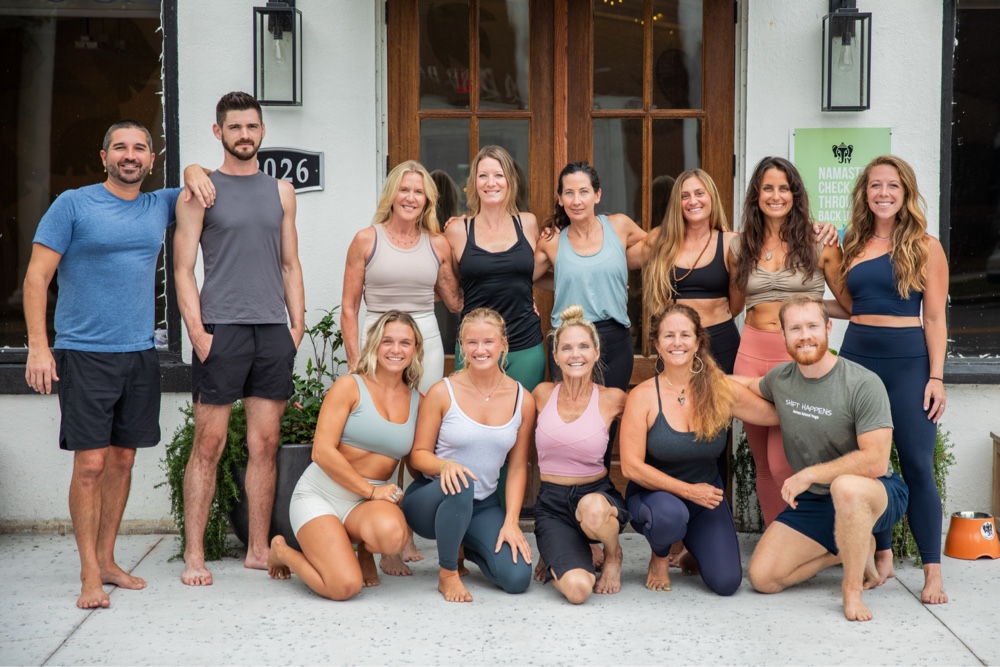
Leading, Following, and Walking Together
One of the most subtle—and powerful—lessons yoga teaches us has nothing to do with poses.
It’s the art of cooperation.
In a yoga studio, cooperation shows up everywhere. In the way we share space and breath. In how we listen to our bodies instead of forcing them. In how we step forward to lead when it’s time—and soften back when it’s not.
True cooperation isn’t passive. It’s perceptive. It asks us to feel the room, the moment, the people around us. It asks us to know when to act, when to pause, and when simply holding steady is the most courageous thing we can do.
Becoming Part of the Whole
When we choose to be part of a community—whether that’s a yoga studio, a teacher training, or a circle of practice—we don’t stay unchanged. Nor should we.
Community is a living organism. When you step into it, you influence it, and it influences you right back.
As a studio owner, I see this constantly. Each teacher, each student, each shared intention shapes the energy of the space. And in return, the culture of the studio shapes how we teach, how we listen, how we show up for one another.
Yoga teaches us that belonging isn’t about losing yourself—it’s about refining yourself through relationship.
Perception Is a Practice
Influence doesn’t come from volume or force. It comes from perception.
In practice, we learn to sense when to deepen and when to back off. Off the mat, the same wisdom applies. There are moments when leadership looks like initiative—and moments when it looks like restraint.
Experience teaches us this. So does humility.
We learn through trial and error, through moments of frustration and moments of flow. Sometimes our ideas don’t land. Sometimes they do. The practice is staying present through both.
Tenacity matters—but so does adaptability. Yoga reminds us again and again: if a shape isn’t serving, we change the shape. Not because we failed, but because we’re listening.
Quiet Leadership
The older I get, the more I believe this: the best leadership is quiet.
True leaders don’t need to be the center of attention. They don’t need constant recognition. They care more about the direction of the collective than their own spotlight.
In yoga philosophy, this is humility in action. Leading without attachment. Guiding without grasping. Trusting that when a group moves with clarity and integrity, the results will speak for themselves.
As teachers, our job isn’t to be the most impressive person in the room—it’s to create conditions where others can access their own strength, wisdom, and agency.
The Balance We Practice
Cooperation is a balance—just like yoga.
It’s knowing when to step forward and when to yield.
When to speak and when to listen.
When to hold steady and when to evolve.
This is leadership as a living practice, not a title.
This is community as a shared breath, not a hierarchy.
This is yoga—on and off the mat.
May we continue to practice together.
With perception.
With patience.
With the courage to lead when called—and the grace to follow when that is what serves the whole.
Journal Prompts for Reflection
Take a few quiet moments this week to sit with one or two of these questions. Let your answers unfold without rushing.
- Where in my life am I being asked to lead more fully? Where am I being invited to listen or follow?
- How do I experience cooperation in my body—does it feel expansive, tense, uncertain, nourishing?
- In what ways do I influence the communities I’m part of? How do they shape me in return?
- Where might adaptability serve me better than persistence right now?
- What does quiet leadership look like in my own life and practice?
- How can I show up with more perception—in my relationships, my work, and my time on the mat?
As always, thank you for being part of this living, breathing community. I’m grateful for each of you and for the ways we continue to grow—together.
With love and presence,
Tymi Howard Bender